
Safety is not a single step in the Strategy Spine. It is woven through every one of them. Assess includes family violence triaging, safety identification, and cultural assessment precisely because the risks that matter most in family law often present before the legal file is even opened. A trauma-informed approach to practice is not optional; it is what the Spine is built to support, from first intake to final resolution.
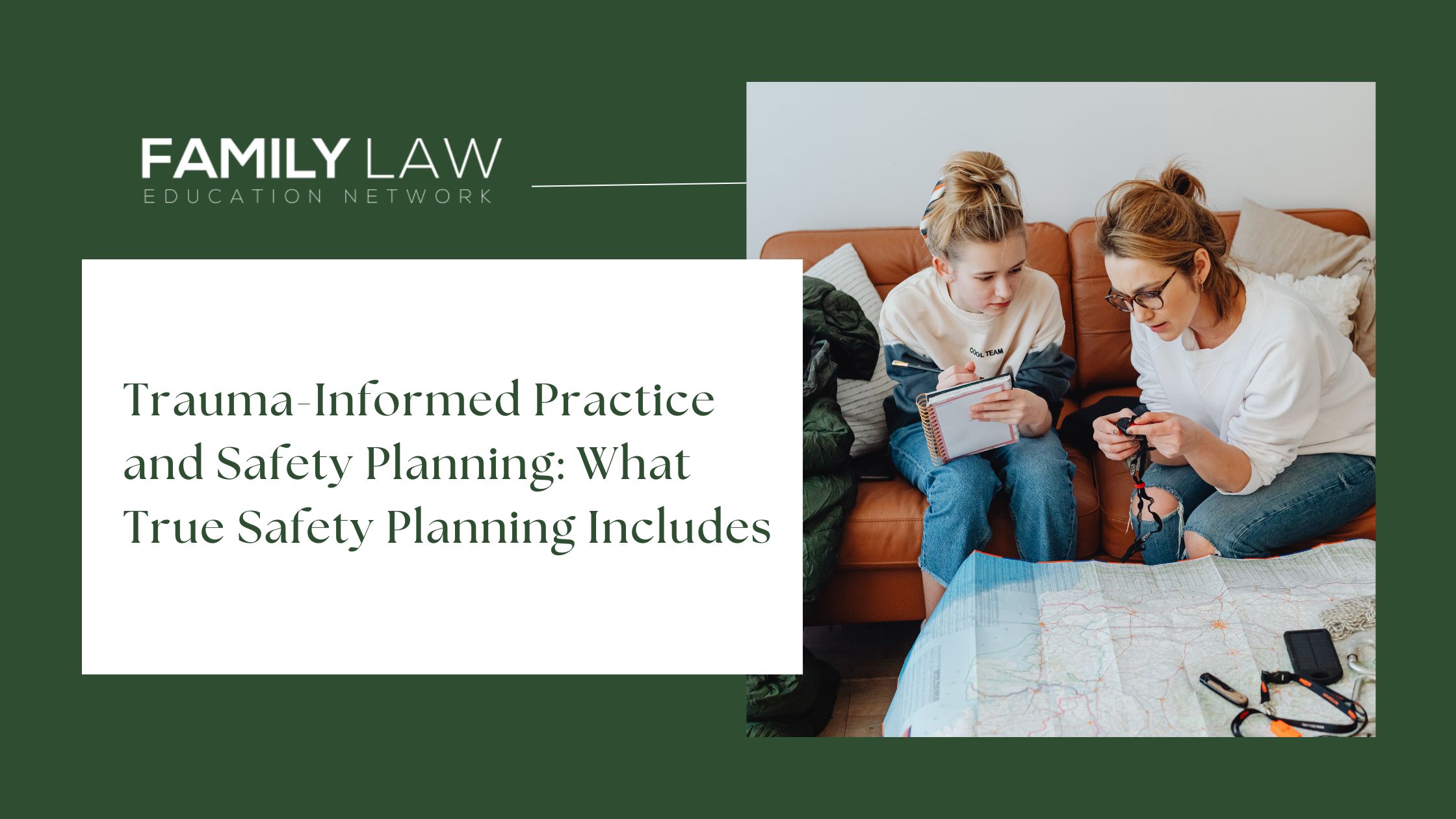
True safety planning in family law is more than drafting an intervention order and hoping for the best. If we work with clients who have lived through family and domestic violence, we are also working with trauma, whether it is named or not.
A trauma-informed approach starts with how we see the client. We assume there is more beneath the surface than the file note can capture. Hypervigilance, avoidance, indecision and “mixed messages” are not resistance or manipulation; they are often survival strategies. Our job is to slow down, create safety, and build a plan that accounts for how trauma affects memory, decision-making and risk.
Safety planning begins in the first conversation. Where is the client speaking from? Who else can hear? Are we asking about violence and control in a way that feels safe, not interrogatory? We explain clearly what can and cannot stay confidential, check how they prefer to communicate, and avoid overwhelming them with options all at once. Feeling emotionally and physically safe with their lawyer is the foundation for any legal strategy.
A meaningful safety plan is layered. Legal tools like AVOs (or jurisdiction equivalent), parenting orders and injunctions are only one layer. We also explore where the perpetrator still has reach: technology, finances, social networks, schools, workplaces, community and culture. Coercive control may continue long after separation and may intensify when proceedings commence. Planning for that reality — not just the last incident of physical violence — is essential to practice in a trauma-informed way.
Children must sit at the centre of the plan, not its edges. That means thinking about how orders will operate at changeover, school events and medical appointments, and who else needs to know about risk (principals, GPs, carers). It also means being honest about when “shared parental responsibility” or unsupervised time is incompatible with safety, even if it looks reasonable on paper.
Finally, trauma-informed safety planning is collaborative. We are not the only professionals in the room. Linking clients with specialised DFV services, counselling, financial counselling and community supports is part of our role. We check in regularly: Does this still feel safe? What has changed? Safety is not a one-off document; it is a living plan that moves with the client.
Safety Planning Checklist for Practitioners
- ☐ Have I screened for all forms of violence, including coercive control and stalking, not just physical assaults?
- ☐ Does my client feel physically and emotionally safe in how we meet and communicate?
- ☐ Is there a layered plan: legal protections, practical steps, digital safety, and contingencies if risk escalates?
- ☐ Have I considered how orders will work in real life — changeovers, school, handovers, technology, third parties?
- ☐ Have I actively involved the client in decisions, respecting their pace, culture and preferences?
- ☐ Have I referred (with consent) to specialist DFV and support services, not tried to “hold” everything in the legal file?
- ☐ Am I revisiting safety and risk at each stage, rather than treating it as a tick-box at intake only?
True safety planning, as this blog describes, is a living process — and that is exactly what the Strategy Spine is designed to sustain. From Assess‘ early risk identification to Resolve‘s integrity checks before finalisation, the Spine ensures that safety is not a tick-box at intake but a continuous thread through every decision, every document, and every resolution. Trauma-informed practice and strategic legal thinking are not in tension. In the Strategy Spine, they are the same thing.