
Family Law Education Network

Resources

Read Latest Case Summaries

Cain & Fleming [2026] FedCFamC1A 63

A Notice of Appeal where the applicant fails to file written submissions and instead makes oral submissions about perceived bias, is unlikely to survive a show cause hearing. Grounds of appeal must actually address the

Read More »

Meint & B Pty Ltd [2026] FedCFamC1A 25

Meint & B Pty Ltd — If a party’s application seeks orders that infringe the rights of an intervener or directly contradict a shareholders agreement, that party should withdraw those defective parts promptly when invited

Read More »

Read Latest Western Australia Case Summaries

Burton & Mafi [2025] FCWA 289

Practitioners and parties must carefully adhere to court-imposed filing deadlines and directions.
The appeal pathway from the FWCA is complex, and depends on the decision maker, the legislation, and whether the order is interlocutory

Read More »

Fishwick & Austen-Leigh [2025] FCWA 173

A conviction for breach of an interim family violence restraining order will constitute “an offence involving violence, or a threat of violence, to the other party” for the purpose of the mandatory cross examination ban

Read More »

Read Our Latest Issue of The Brief

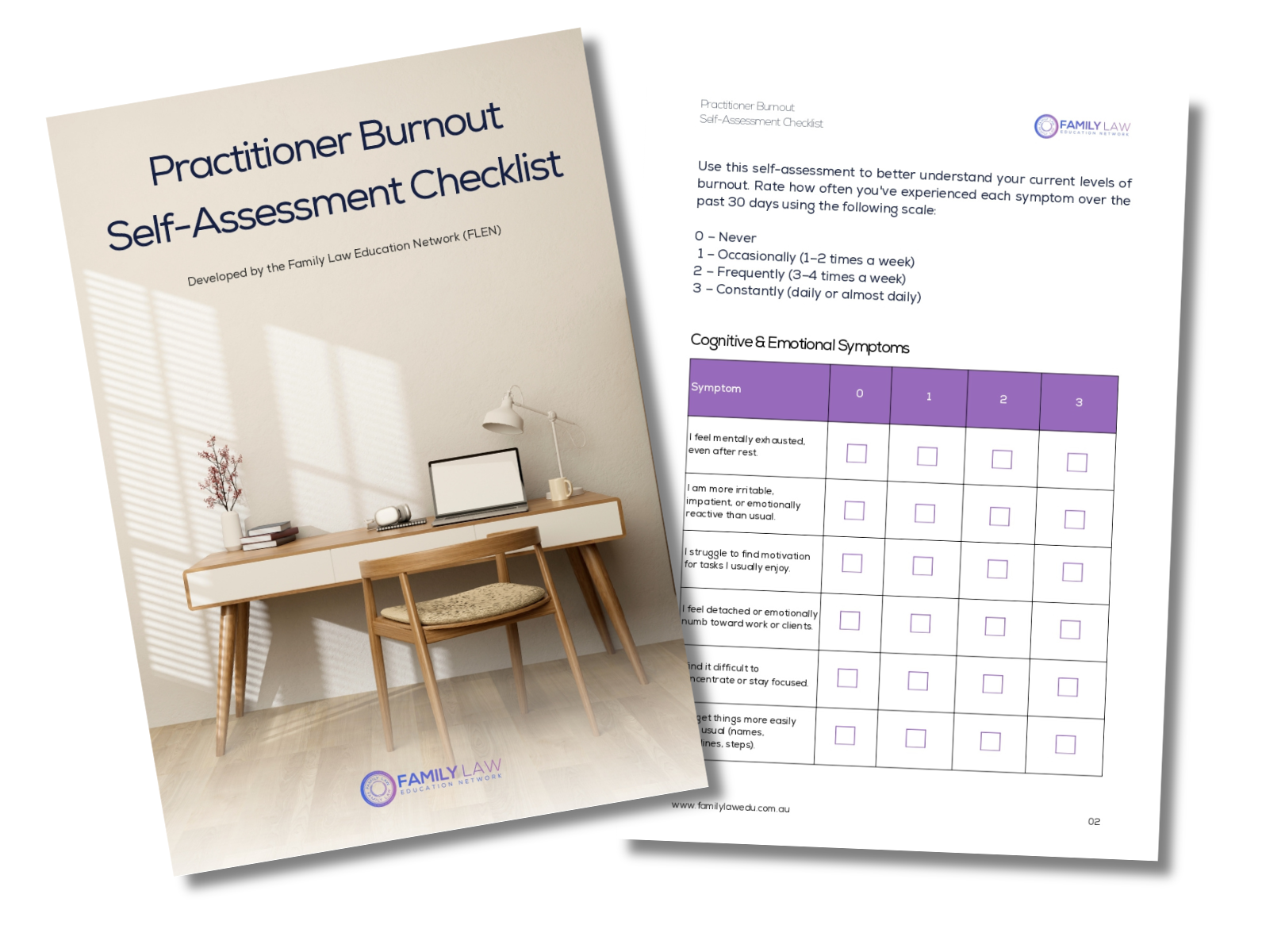
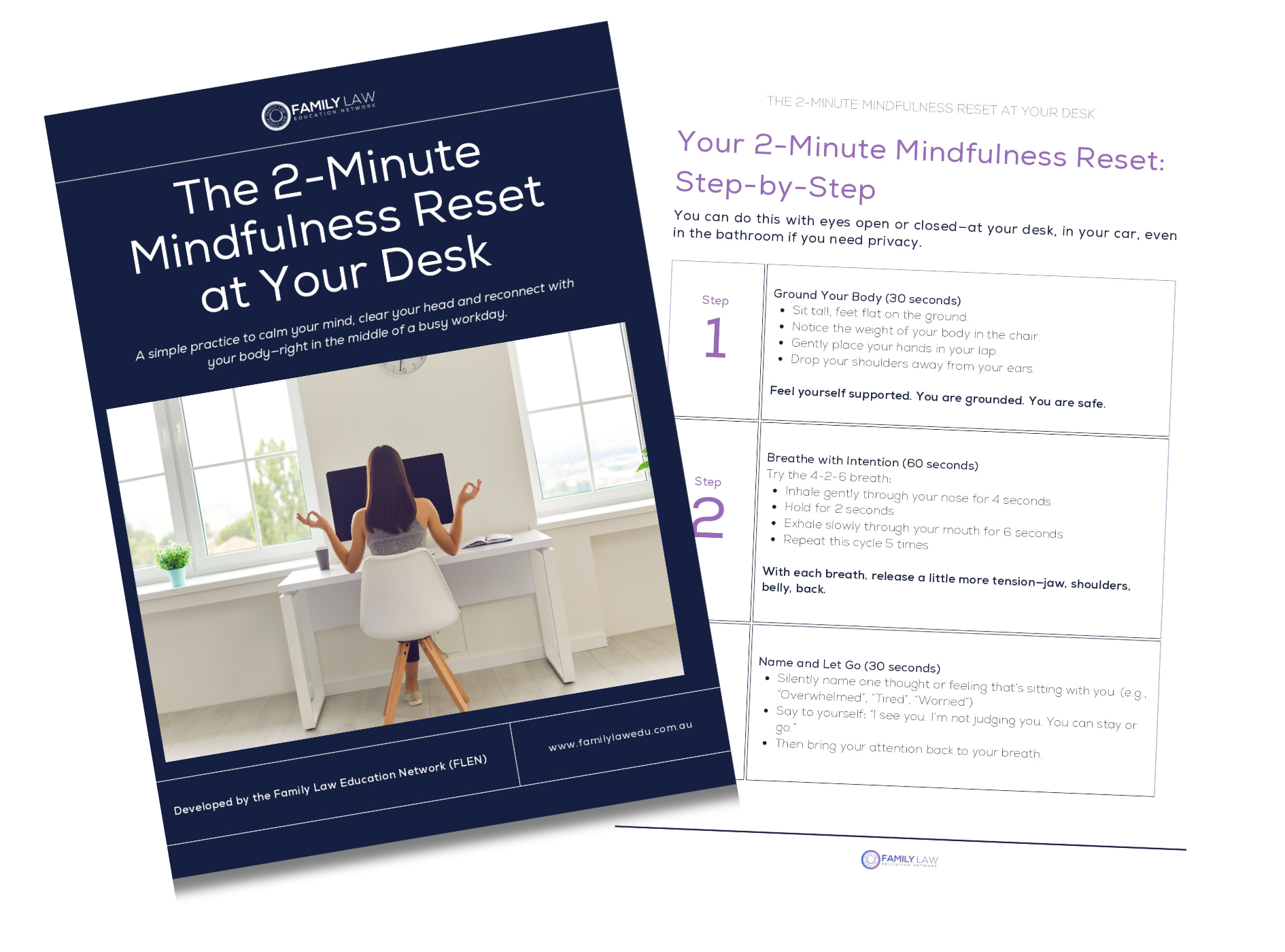
Practitioner Wellness Resources

Managing Anxiety

Everyone experiences anxiety from time to time. It is a normal response to stress and can be helpful in some situations. However, anxiety can also be debilitating and interfere with daily life.

Meditation vs Mindfulness

Meditation and mindfulness are two practices that have been shown to have a number of benefits for both physical and mental health. Meditation is the practice of focusing your attention on a single point, such

Supporting a Colleague

We spend a great deal of time at work with our colleagues, so we’re in a good position to spot changes in their mood or behavior. If you notice that a colleague seems to be

Family Law Education Network of Australia Blogs

Cracking Complex Property Pools: Trusts What Every Family Lawyer Must Understand Before Advising or Drafting Orders

Trusts are one of the most challenging asset types in family law property matters. Whether it’s a family discretionary trust, a hybrid unit trust, a corporate structure wrapped inside a trust, or an SMSF holding trust assets, practitioners must understand how a trust operates before advising clients or attempting to draft Orders that deal with trust property. This guide breaks down the essentials every lawyer must master.

Read More »

Forensic Evidence in Family Law: When to Call in the Experts

Family law matters often turn on more than what parties say. They turn on what can be proven. In an era where financial structures are complex, parenting disputes are increasingly nuanced, and digital footprints form part of the evidentiary landscape, forensic evidence has become an essential tool for modern family lawyers.

Read More »

Reading Between the Lines: Spotting Emotional Triggers in Client Conversations

Family law clients rarely speak in straight lines. Their words are shaped by fear, grief, anger, shame, confusion, or exhaustion — and often all at once. As practitioners, our job is not only to listen to what clients say, but to understand what sits underneath what they say. The ability to spot emotional triggers early is one of the most valuable skills a family lawyer can develop. It informs strategy, improves rapport, reduces conflict, and ultimately leads to better outcomes for clients and matters alike.

Read More »